
Hazard Communication: OSHA's Second Most Cited Standard
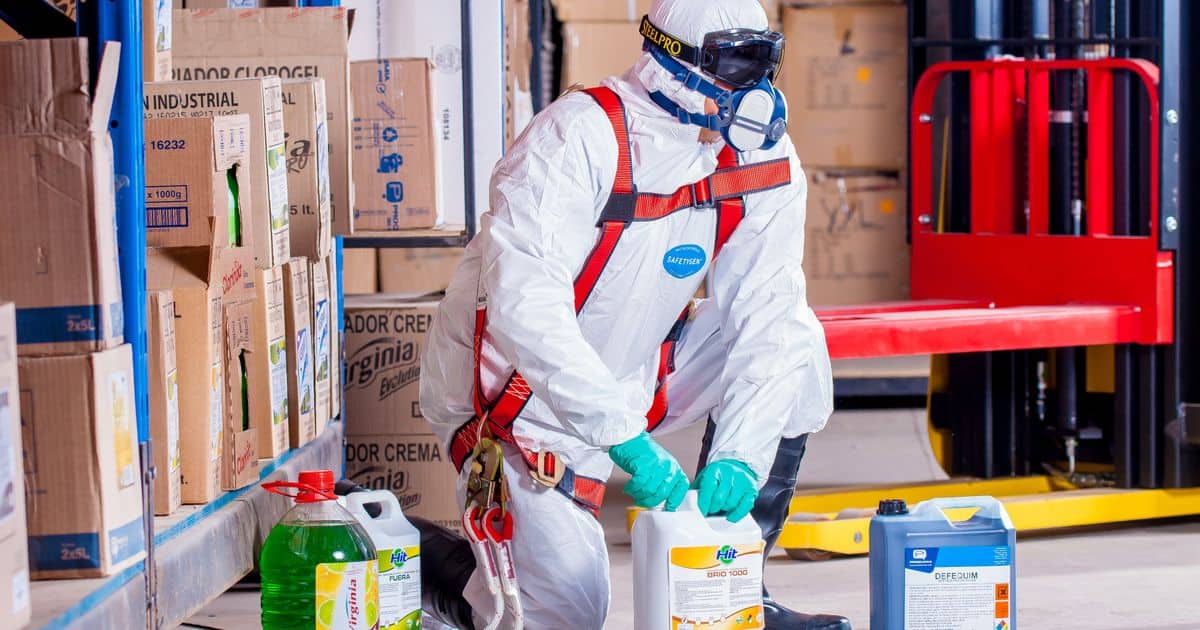
Hazard Communication is the standard that requires employers to tell workers about the chemicals they handle. In OSHA's enforcement data it is cited more often than almost any other rule. OSHA lists 1910.1200 as the second most frequently cited standard nationally, behind fall protection. Counts below are citations issued under 1910.1200 across federal and state-plan programs, by issuance year. Data queried June 5, 2026.
Citations by year
In the enforcement data, Hazard Communication citations rose from 6,191 in 2020 to 8,184 in 2024, with $7.72 million in current penalties on record for the 2024 citations.
| Year | Hazard Communication citations |
|---|---|
| 2020 | 6,191 |
| 2021 | 5,896 |
| 2022 | 7,004 |
| 2023 | 8,082 |
| 2024 | 8,184 |
Counts are citations issued under 29 CFR 1910.1200 across federal and state-plan programs, by issuance year. OSHA's official Top 10 is published at osha.gov/top10citedstandards.
Which parts of the standard are cited most
Most Hazard Communication citations come from a few specific requirements. In 2024 the most cited parts were:
| Subsection | Requirement | 2024 citations |
|---|---|---|
| 1910.1200(e)(1) | Written hazard communication program | 2,567 |
| 1910.1200(h)(1) | Employee information and training | 2,021 |
| 1910.1200(g)(8) | Safety data sheets kept accessible | 871 |
| 1910.1200(g)(1) | Safety data sheets | 587 |
| 1910.1200(f)(6)(ii) | Workplace labeling | 518 |
The pattern is consistent year to year: the written program and worker training account for the largest share, followed by safety data sheet and labeling requirements.
What the standard requires
29 CFR 1910.1200 requires employers whose workers may be exposed to hazardous chemicals to maintain a written hazard communication program, label containers, keep a safety data sheet for each hazardous chemical, and train employees on the hazards and protective measures. The standard is aligned with the Globally Harmonized System of Classification and Labelling of Chemicals. The full regulatory text is published by the Office of the Federal Register at ecfr.gov (Title 29, Section 1910.1200). See also the most cited standard, fall protection.
Methodology and sources
Citation counts are from the OSHA violation table in the U.S. DOL enforcement data API, counted by citation issuance date, for standard code 1910.1200 and its subsections, federal and state-plan programs combined, delete-flagged records excluded. Penalty figures are current penalties on record. Standard text: Office of the Federal Register, eCFR Title 29, 1910.1200. Most-cited ranking: OSHA, osha.gov/top10citedstandards. No figures are estimated.
Hazard Communication, 29 CFR 1910.1200, is the second most frequently cited OSHA standard, behind fall protection.
The enforcement data records 8,184 citations under 1910.1200 in 2024, with $7.72 million in current penalties on record.
The written hazard communication program requirement, 1910.1200(e)(1), with 2,567 citations in 2024, followed by employee training, 1910.1200(h)(1), with 2,021.
A written program, container labels, a safety data sheet for each hazardous chemical, and employee training on chemical hazards and protective measures.
Data Source and Methodology
Data synced dailyData on this page comes from the U.S. Department of Labor's OSHA enforcement database, accessed via the DOL public data API. Records are updated daily. We strive for accuracy, but errors in data processing or establishment grouping are possible. Penalty amounts reflect the latest penalty amounts on record in the DOL database and may differ from initial assessments or final amounts after informal conference, settlement, or judicial review. Company pages group inspection records by normalized employer name, city, and state as reported in OSHA records. That grouping is deterministic and non-fuzzy, but it is not a universal legal-entity identifier. If you believe any record is inaccurate, please report it and we will investigate. This product uses the DOL Data API but is not endorsed or certified by the DOL. For official and authoritative records, visit osha.gov.