
OSHA Machine Guarding Requirements: What 1910.212 Demands, and the Enforcement Record
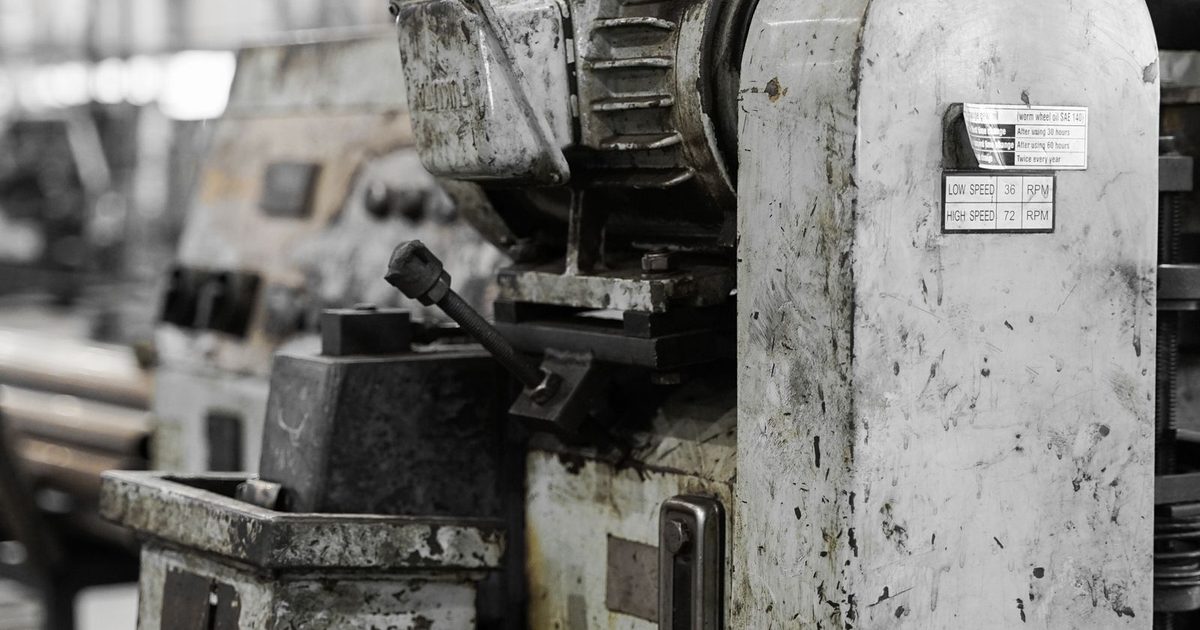
Machine guarding is the general rule that keeps hands, sleeves, and bodies out of moving machinery, and it carries a high penalty total, about $267 million on record. This is what 29 CFR 1910.212 requires and what the enforcement records show. Citation counts come from the full DOL OSHA enforcement dataset, counted by citation issuance year, federal and state-plan programs combined. Data queried June 30, 2026.
Key Findings
- 29 CFR 1910.212, general machine guarding, has been cited 249,805 times across 244,568 inspections, with about $267 million in current penalties on record.
- OSHA ranks it tenth on its official Top 10 most cited standards for fiscal year 2025.
- The general guarding requirement, (a)(1), accounts for 118,543 citations, about 47 percent of the total, with $168.9 million in penalties.
- Point-of-operation guarding, (a)(3)(ii), follows with 63,551 citations and $75.7 million in penalties.
- Annual citations rose from 1,824 in 2020 to 2,624 in 2025, peaking at 2,773 in 2023.
What the machine guarding standard requires
1910.212 is the general guarding rule that applies to all machines. The provisions cited most often are:
- Types of guarding, (a)(1). Provide one or more methods of guarding to protect operators and others from hazards such as the point of operation, nip points, rotating parts, and flying chips or sparks.
- Point of operation, (a)(3)(ii). Guard the point of operation so the operator cannot place any part of the body in the danger zone during the operating cycle.
- Fan blades, (a)(5). Fan blades less than 7 feet above the floor must be guarded, with guard openings no larger than one-half inch.
- Anchoring, (b). Machines designed for a fixed location must be securely anchored to prevent walking or moving.
- Guard installation, (a)(2). Guards must be affixed to the machine where possible and must not create a hazard of their own.
The full regulatory text is published by the Office of the Federal Register at ecfr.gov (Title 29, Section 1910.212), and by OSHA at osha.gov.
The most cited machine guarding provisions
Citations are recorded against specific paragraphs. The general guarding requirement and point-of-operation guarding together account for most machine guarding citations and the bulk of the penalties.
| Provision | Covers | Citations | Penalties |
|---|---|---|---|
| 1910.212(a)(1) | Types of guarding required | 118,543 | $168.9M |
| 1910.212(a)(3)(ii) | Point of operation guarding | 63,551 | $75.7M |
| 1910.212(a)(5) | Fan blade guarding | 32,484 | $5.8M |
| 1910.212(b) | Anchoring fixed machinery | 22,106 | $5.2M |
| 1910.212(a)(2) | Guards affixed, not a hazard | 4,582 | $5.4M |
Counts are all years on record by citation issuance date, with whitespace variants of the same paragraph code combined. Penalties are current penalties on record, rounded to the nearest $100,000.
Citation trend, 2020 to 2025
| Year | Citations under 1910.212 |
|---|---|
| 2020 | 1,824 |
| 2021 | 2,075 |
| 2022 | 2,405 |
| 2023 | 2,773 |
| 2024 | 2,697 |
| 2025 | 2,624 |
Counts are by citation issuance year across federal and state-plan programs. The full record for this standard is on the 1910.212 standard page, and the wider ranking is in our Top 10 most cited standards analysis.
Methodology and sources
Citation counts are from the U.S. DOL OSHA enforcement dataset (developer.dol.gov), counted by citation issuance date, federal and state-plan programs combined, delete-flagged records excluded. Provision totals combine whitespace variants of the same paragraph code. Penalty values are current penalties on record, not necessarily final after settlement, rounded to the nearest $100,000. Standard text and paragraph subjects: Office of the Federal Register, eCFR Title 29, 1910.212, and OSHA, osha.gov. Most-cited ranking: OSHA, osha.gov/top10citedstandards, fiscal year 2025. No records are estimated. Data queried June 30, 2026.
29 CFR 1910.212 sets the general machine guarding requirements for all machines. Employers must provide one or more methods of guarding to protect operators and other employees from hazards such as the point of operation, ingoing nip points, rotating parts, and flying chips or sparks. Guards must be affixed to the machine where possible and must not create a hazard of their own.
The point of operation is the area on a machine where work is performed on the material. Under 1910.212(a)(3)(ii), it must be guarded to prevent the operator from having any part of the body in the danger zone during the operating cycle.
1910.212(a)(1), the general requirement to provide one or more methods of machine guarding, with 118,543 citations on record, roughly 47 percent of all citations under the standard.
In the federal enforcement records, 29 CFR 1910.212 has been cited 249,805 times across 244,568 inspections, with about $267 million in current penalties on record. It was cited 2,624 times in 2025, and OSHA ranks it tenth on its Top 10 for fiscal year 2025.
Data Source and Methodology
Data synced dailyData on this page comes from the U.S. Department of Labor's OSHA enforcement database, accessed via the DOL public data API. Records are updated daily. We strive for accuracy, but errors in data processing or establishment grouping are possible. Penalty amounts reflect the latest penalty amounts on record in the DOL database and may differ from initial assessments or final amounts after informal conference, settlement, or judicial review. Company pages group inspection records by normalized employer name, city, and state as reported in OSHA records. That grouping is deterministic and non-fuzzy, but it is not a universal legal-entity identifier. If you believe any record is inaccurate, please report it and we will investigate. This product uses the DOL Data API but is not endorsed or certified by the DOL. For official and authoritative records, visit osha.gov.